
What Is the Best Weight Loss Treatment Available in the UK Right Now?
The most clinically effective prescription weight loss treatments currently available in the UK are GLP 1 receptor agonists, a class of medicines that work by regulating appetite, slowing digestion, and influencing the brain's satiety signals. The two principal options available privately are Mounjaro (tirzepatide) and Wegovy (semaglutide).
Based on clinical trial data:
- Mounjaro produces average weight loss of 15 to 20% of body weight, based on SURMOUNT trials.
- Wegovy produces average weight loss of 12 to 15% of body weight, based on STEP trials.
Both Mounjaro and Wegovy are NICE approved and available through NHS specialist services for eligible patients. All three are available privately through GPhC registered UK pharmacies following a clinical assessment.
This guide covers everything you need to understand about weight loss treatment in the UK: what these medications are, how they work, who is eligible, what they cost, how to access them safely, and what to realistically expect from treatment.
For a closer look at what these medicines may offer, read our overview of the benefits of prescription slimming injections in the UK.
Part 1: Understanding GLP 1, The Science Behind Modern Weight Loss Treatment
What Is GLP 1?
GLP 1 stands for glucagon like peptide 1, a hormone produced naturally in the gut in response to eating. When you consume food, your intestinal cells release GLP 1, which performs several functions simultaneously.
- It signals the pancreas to release insulin, lowering blood glucose.
- It suppresses glucagon production, reducing glucose release from the liver.
- It slows gastric emptying, so food leaves the stomach more slowly and produces sustained fullness.
- It signals the hypothalamus in the brain to reduce appetite and increase satiety.
In people with obesity or excess weight, this natural GLP 1 signalling system is often dysregulated, meaning the body does not receive or respond to these satiety and appetite signals as effectively as it should. GLP 1 receptor agonists are designed to mimic and amplify this system, producing stronger and more sustained appetite regulation than the body achieves naturally.
How GLP 1 Receptor Agonists Work for Weight Loss
When a GLP 1 medication is used, it binds to GLP 1 receptors throughout the body, including in the pancreas, gut, and brain. It activates the same pathways as natural GLP 1, but with significantly greater potency and duration.
The result is a combination of effects that work together to reduce food intake and support weight loss.
- Reduced appetite: the hypothalamus receives stronger satiety signals, meaning the desire to eat is suppressed between meals and portion sizes naturally decrease.
- Slower gastric emptying: food stays in the stomach longer, sustaining the physical sensation of fullness and reducing the speed at which hunger returns after eating.
- Reduced food reward signalling: GLP 1 receptors in the brain's reward centres, including the nucleus accumbens, are also activated, reducing the psychological drive toward high calorie, high reward foods.
- Improved blood glucose regulation: insulin is released more effectively in response to food, and glucose production between meals is reduced. This is particularly relevant for patients with type 2 diabetes or prediabetes.
These mechanisms do not require dietary restriction to activate, but clinical evidence consistently shows that they work most effectively when combined with lifestyle changes. GLP 1 treatment is not a replacement for a sustainable diet and activity approach. It is a pharmacological tool that makes those approaches more achievable for people whose biology works against them.
The Difference Between GLP 1 and GIP plus GLP 1
Mounjaro (tirzepatide) differs from Wegovy in one clinically significant way: it acts on two receptors simultaneously.
In addition to the GLP 1 receptor, tirzepatide also activates the GIP (glucose dependent insulinotropic polypeptide) receptor. GIP is another gut hormone involved in energy metabolism and fat storage. By activating both pathways together, Mounjaro produces a synergistic effect that exceeds the appetite and weight loss response seen with GLP 1 alone, which is reflected in the higher average weight loss benchmarks from the SURMOUNT trials compared to the Wegovy Data.
This dual mechanism is why Mounjaro is considered a next generation GLP 1 treatment. It operates on the same fundamental biological system but with an additional receptor target that enhances the overall effect.
Part 2: The Three Main Weight Loss Treatments Available in the UK
Mounjaro (Tirzepatide)
| Feature | Detail |
|---|---|
| Manufacturer | Eli Lilly |
| Mechanism | Dual GIP plus GLP 1 receptor agonist |
| Frequency | Once weekly |
| Available doses | 2.5 mg, 5 mg, 7.5 mg, 10 mg, 12.5 mg, 15 mg |
| NICE approved | Yes (TA878) |
| NHS available | Yes, phased rollout through specialist services |
| Average weight loss | 15 to 20% of body weight |
Mounjaro is the most recently approved and highest efficacy GLP 1 option currently available in the UK. The SURMOUNT 1 trial demonstrated average weight loss of 20.9% in participants without diabetes who reached the 15 mg maintenance dose, a result that significantly exceeded what had been seen with any previous pharmacological weight management intervention.
The KwikPen delivery device delivers a fixed 0.6 mL dose per weekly treatment, with four doses per pen. The titration protocol runs from 2.5 mg to 15 mg across six dose steps, each held for a minimum of four weeks before escalation.
For deeper clinical context, read our full Mounjaro tirzepatide guide. For current provider pricing, the Mounjaro price comparison page gives a focused view across UK pharmacies.
Wegovy (Semaglutide)
| Feature | Detail |
|---|---|
| Manufacturer | Novo Nordisk |
| Mechanism | GLP 1 receptor agonist |
| Frequency | Once weekly |
| Available doses | 0.25 mg, 0.5 mg, 1 mg, 1.7 mg, 2.4 mg |
| NICE approved | Yes (TA875) |
| NHS available | Yes, phased rollout through specialist services |
| Average weight loss | 12 to 15% of body weight |
Wegovy is the established weekly semaglutide treatment for weight management, distinct from Ozempic (semaglutide 1 mg), which is approved for type 2 diabetes management but not licensed for weight management in the UK. The STEP trials demonstrated average weight loss of 14.9% over 68 weeks at the 2.4 mg maintenance dose, with a significant proportion of participants achieving 15% or more.
Wegovy uses a single use auto injector pen. There is no dial or click mechanism. Each pen delivers one dose, making it simpler in operation than the multi dose Mounjaro KwikPen.
For a complete clinical overview, see the Wegovy weight loss guide.

Part 3: Who Is Eligible for Weight Loss Treatment in the UK?
NHS Eligibility Criteria
For NHS access to Mounjaro or Wegovy through specialist weight management services, NICE guidance sets the following general criteria.
| Criteria | Detail |
|---|---|
| BMI threshold | 30 kg/m² or above in most pathways |
| With comorbidities | BMI 27 to 29.9 with at least one weight related health condition |
| Qualifying conditions | Type 2 diabetes, hypertension, dyslipidaemia, sleep apnoea, cardiovascular disease, prediabetes |
| Access route | GP referral to specialist weight management service (Tier 3) |
| Availability | Phased rollout, not universally available in all regions in 2026 |
The practical gap: NICE approval does not mean universal NHS availability. Local commissioning groups implement the guidance at different speeds and with different criteria. Many patients who qualify under NICE thresholds find that NHS access in their area is limited or has significant waiting times, which is the primary reason most UK patients continue to access these treatments privately in 2026.
Private Eligibility Criteria
Private prescribers generally follow similar BMI thresholds to NHS guidance, though the specific criteria can vary by provider.
- BMI 30 or above: typically eligible for private GLP 1 prescribing without additional conditions.
- BMI 27 to 29.9: may be eligible with at least one qualifying weight related health condition.
- BMI below 27: prescription GLP 1 treatment is not typically appropriate; lifestyle and non pharmacological approaches are usually recommended first.
A licensed prescriber makes the final eligibility determination following a full clinical assessment, which includes reviewing medical history, current medications, and any contraindications, not just calculating BMI.
To understand your BMI category and its implications for treatment eligibility, the BMI calculator with NHS eligibility context provides an NHS aligned result in any UK measurement format.
Who Should Not Use GLP 1 Treatments
GLP 1 medications are not appropriate for everyone. Common contraindications include:
- Personal or family history of medullary thyroid carcinoma (MTC).
- Multiple endocrine neoplasia syndrome type 2 (MEN 2).
- Severe gastrointestinal conditions, for example gastroparesis.
- Pregnancy or breastfeeding.
- Certain concurrent medications that interact with GLP 1 drugs.
- Severe kidney or liver impairment, assessed case by case.
A thorough clinical assessment by a licensed prescriber is essential, not optional, before starting any of these treatments.
Part 4: How Weight Loss Treatment Is Accessed in the UK
Route 1: NHS (Specialist Weight Management Service)
The NHS route for GLP 1 treatment involves:
- GP consultation: discuss weight management and request referral.
- Referral to Tier 3 weight management service: specialist multidisciplinary service.
- Assessment: BMI, comorbidities, previous weight management attempts, clinical suitability.
- Prescription initiation: if eligible, treatment begins under specialist supervision.
- Ongoing monitoring: regular review by the specialist team.
Advantages: no medication cost to the patient, although standard NHS prescription charge applies where relevant.
Disadvantages: availability varies significantly by region, waiting times can be lengthy, and eligibility criteria may be applied more strictly than the minimum NICE thresholds.
Route 2: Private Online Pharmacy (Most Common Route in 2026)
The private online route involves:
- Research and comparison: understanding options, comparing providers and prices.
- Online clinical assessment: questionnaire based assessment reviewed by a licensed prescriber.
- Prescription issued: if clinically suitable, the prescriber issues a private prescription.
- Medication dispensed: GPhC registered pharmacy fulfils and delivers the prescription.
- Ongoing renewal: periodic prescription renewal reviews, with frequency varying by provider.
Advantages: no waiting list, accessible without GP involvement, and competitive pricing across multiple providers.
Disadvantages: cost, variable quality of clinical assessment process, need for careful pharmacy verification, and less clinical oversight than the NHS specialist route.
Route 3: Private Clinic
Some patients access GLP 1 treatment through private weight management clinics, either face to face or via telehealth, which typically offer more comprehensive clinical assessment and monitoring than standard online pharmacy pathways.
Advantages: higher quality clinical oversight, in person assessment available, and better access to a prescriber if complications arise.
Disadvantages: higher cost than the online pharmacy route, and not all clinics cover all treatments.
Whichever route you choose, the medicine should be licensed in the UK. Read how licensed weight loss injections can support your journey.
Part 5: What Weight Loss Treatment Costs in the UK
Private Market Pricing Overview (2026)
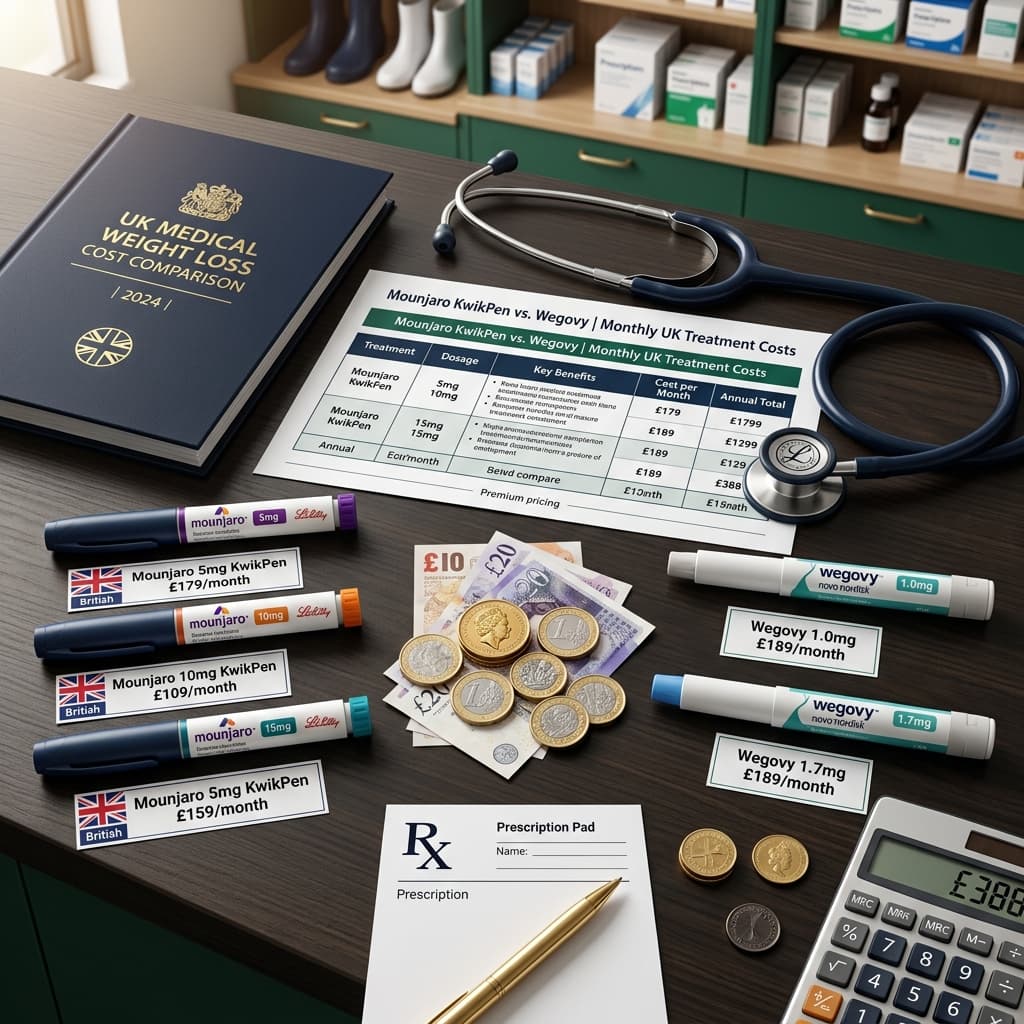
Both treatments follow a titration pricing structure. Costs increase with each dose step.
| Treatment | Starter Monthly Cost | Maintenance Monthly Cost | Annual (Maintenance) |
|---|---|---|---|
| Wegovy | £128 to £170 | £240 to £295 | £2,880 to £3,540 |
| Mounjaro | £128 to £180 | £249 to £375 | £2,988 to £4,500 |
Prices are approximate, based on independent monitoring of GPhC registered UK pharmacies in 2026.
Additional Costs to Factor In
Beyond the pen price, the following components commonly affect total monthly spend:
- Consultation fees: £0 to £50 per prescription cycle, varying by provider.
- Delivery: £0 to £15 per order, because cold chain handling is required.
- Programme or monitoring fees: £0 to £40 per month where applicable.
- Needles and consumables: variable, depending on provider package.
For the most complete and current provider by provider price comparison, including Trustpilot ratings and GPhC verification status, see the Mounjaro vs Wegovy price comparison.
For verified lowest cost options across all three treatments, see the cheapest weight loss treatment options UK hub.
Part 6: What to Realistically Expect From Treatment
Timeline: When Does Weight Loss Begin?
Most patients on GLP 1 treatment notice appetite changes within the first two to four weeks. The biological mechanisms are active from the first dose. Visible weight loss typically begins during the first month, though the rate of loss varies significantly by individual.
A general timeline:
| Timeframe | What Typically Happens |
|---|---|
| Weeks 1 to 4 | Appetite reduction begins; early weight loss possible; side effects most common at starter dose |
| Months 2 to 3 | Dose increasing; appetite suppression strengthening; consistent weight loss in most patients |
| Months 4 to 6 | Approaching or at maintenance dose; weight loss rate typically peaks |
| Months 6 to 12 | Ongoing maintenance dose; weight loss continues but may plateau |
| Year 2 plus | Weight maintenance phase; ongoing treatment usually required |
Side Effects: What Is Normal?
The most common side effects of GLP 1 treatment are gastrointestinal and are most pronounced during the first weeks of treatment and at each dose increase:
- Nausea: the most commonly reported side effect; typically reduces after the first 2 to 4 weeks at each dose step.
- Vomiting: less common than nausea; usually occurs if eating too quickly or in excessive amounts.
- Diarrhoea or constipation: one or the other is commonly reported; typically resolves as the body adjusts.
- Reduced appetite: technically the intended mechanism, not a side effect, but it can feel dramatic initially.
- Fatigue: reported by some patients, particularly in early weeks.
Less common but more serious side effects that require medical review:
- Severe persistent nausea or vomiting.
- Signs of pancreatitis, including severe abdominal pain.
- Gallbladder issues.
- Rapid heart rate.
- Injection site reactions that do not resolve.
Always report any concerning symptoms to your prescriber promptly.
The Role of Lifestyle: Why Treatment Works Best With It
GLP 1 medications are not a standalone solution. Clinical trial data consistently shows better outcomes when treatment is combined with meaningful lifestyle changes, and the biological mechanisms of GLP 1 drugs actually make lifestyle changes more achievable.
- Diet: appetite suppression from GLP 1 treatment makes reducing calorie intake significantly easier. Most patients naturally reduce portion sizes and find high calorie foods less appealing. Prioritising protein and vegetables, and reducing ultra processed food intake, supports better outcomes.
- Exercise: GLP 1 medications do not selectively preserve muscle mass during weight loss. This requires deliberate effort. Resistance training during treatment helps ensure that weight loss comes from fat tissue rather than muscle, which matters for long term metabolic health.
- Sleep: poor sleep quality affects cortisol and ghrelin levels, both of which influence appetite and weight. Addressing sleep quality alongside GLP 1 treatment supports better outcomes.
- Stress management: chronic stress elevates cortisol, which promotes fat storage particularly around the abdomen. Managing psychological stress is a relevant component of a holistic weight management approach.
Part 7: Safety, Choosing a Provider Responsibly
The GPhC Verification Checklist
Every GPhC registered pharmacy in the UK has a public registration number verifiable at pharmacyregulation.org. This is the minimum baseline for any online pharmacy dispensing prescription medicines. Before using any provider:
- Verify GPhC registration at pharmacyregulation.org.
- Check the MHRA internet pharmacy logo, making sure it is displayed and linked on the homepage.
- Confirm that a named GMC registered prescriber is identified.
- Verify the Trustpilot rating independently at trustpilot.com.
- Confirm full cost disclosure before checkout, including all visible fees.
- Check that delivery confirms cold chain handling.
Red Flags to Avoid
- No GPhC registration number visible.
- No named prescriber on the clinical team.
- Clinical "assessment" is purely a questionnaire with no human review.
- Prices significantly below market range with no explanation.
- No cold chain delivery confirmation.
- No mechanism for contacting a prescriber after purchase.
Notifying Your GP
Whether you access treatment privately or through NHS, it is good practice to inform your GP that you are taking a GLP 1 medication. This ensures your medical records are complete, avoids potential drug interactions with any other medications your GP prescribes, and allows your GP to monitor relevant health markers such as blood glucose, blood pressure, and kidney function as part of routine care.
FAQ: Weight Loss Treatment UK
1. What is the most effective weight loss treatment in the UK?
Based on clinical trial data, Mounjaro (tirzepatide) currently shows the highest average weight loss of any MHRA approved weight loss medication in the UK, approximately 15 to 20% of body weight in the SURMOUNT trials. However, individual responses vary, and "most effective" for any specific person depends on their biology, health history, and tolerance. Wegovy is the second highest efficacy option.
2. How do I know if I qualify for weight loss treatment in the UK?
The general eligibility threshold is BMI 30 or above. Patients with a BMI of 27 to 29.9 may qualify if they have a weight related health condition such as type 2 diabetes, high blood pressure, or sleep apnoea. The BMI calculator at Healthwise360 provides an NHS aligned BMI result with eligibility context. Final eligibility is always determined by a licensed prescriber following a clinical assessment.
3. Can I get weight loss injections on the NHS?
Yes. Both Wegovy and Mounjaro are NICE approved and have NHS access pathways through specialist weight management services. However, availability is subject to local commissioning and service capacity. In 2026, many eligible patients still access treatment privately due to NHS waiting times and regional availability constraints. Discuss NHS eligibility with your GP.
4. How long do you stay on weight loss treatment?
GLP 1 treatments are generally intended as long term interventions. Clinical data shows that weight regain commonly occurs when treatment stops, because the underlying biological factors driving excess weight, including appetite dysregulation, are not permanently resolved by medication. Most clinical guidance treats GLP 1 treatment similarly to blood pressure medication: effective while taken, with return of the underlying condition when stopped. The long term use question is one to discuss with a prescriber.
5. What happens when you stop weight loss treatment?
Studies show that weight regain is common after stopping GLP 1 treatment, often recovering a significant proportion of lost weight within twelve months. This is not a failure of willpower; it reflects the ongoing biological mechanisms that GLP 1 treatment was managing. Stopping should be done with prescriber guidance and ideally with a plan for maintaining lifestyle changes that support weight management.
6. How do I compare weight loss treatment prices safely?
Use an independent comparison platform that covers all dose steps, not just starter prices, shows GPhC verification and Trustpilot ratings alongside prices, and discloses hidden fees. The weight loss treatment price comparison guide covers more than 64 GPhC registered pharmacies across all three treatments and all dose strengths. The Mounjaro vs Wegovy comparison hub includes Trustpilot filtering and dose specific pricing.
7. Is weight loss treatment safe to buy online in the UK?
Yes, when purchased from a GPhC registered pharmacy following a proper clinical assessment from a GMC registered prescriber. The risks arise from unregistered providers or platforms that issue prescriptions without genuine clinical assessment. Always verify GPhC registration independently before purchasing.
Conclusion
Weight loss treatment in the UK in 2026 is more clinically effective, more accessible, and better evidenced than at any previous point. The GLP 1 class of medications, particularly Mounjaro and Wegovy, represents a genuine advance in pharmacological weight management, producing outcomes that were not achievable with older treatment options.
However, accessing treatment well requires understanding:
- What these medications are and how they work: not just what they cost.
- Whether you are clinically eligible: BMI, comorbidities, and contraindications.
- Which route is appropriate: NHS, private online pharmacy, or private clinic.
- What the realistic total cost is: across the full titration schedule, not just the starter price.
- How to choose a safe, legitimate provider: GPhC verification, Trustpilot, and prescriber credentials.
- What to expect from treatment: timeline, side effects, lifestyle integration, and long term maintenance.
This guide has covered all of those dimensions. For the next steps in your research, compare current prices across all three treatments through the Healthwise360 comparison hub, calculate your BMI with the BMI calculator with eligibility context, or read the full treatment guide most relevant to you: Mounjaro or Wegovy.
This article is for informational purposes only and does not constitute medical advice. All treatments discussed are prescription only medicines in the UK that require a clinical assessment before they can be dispensed. All prices are approximate and subject to change.
Sources & further reading
Official UK guidance and published research on the topics covered in this article.
- 1
- 2
- 3
- 4
- 5
- 6Register of pharmacies
General Pharmaceutical Council (GPhC)