
Introduction
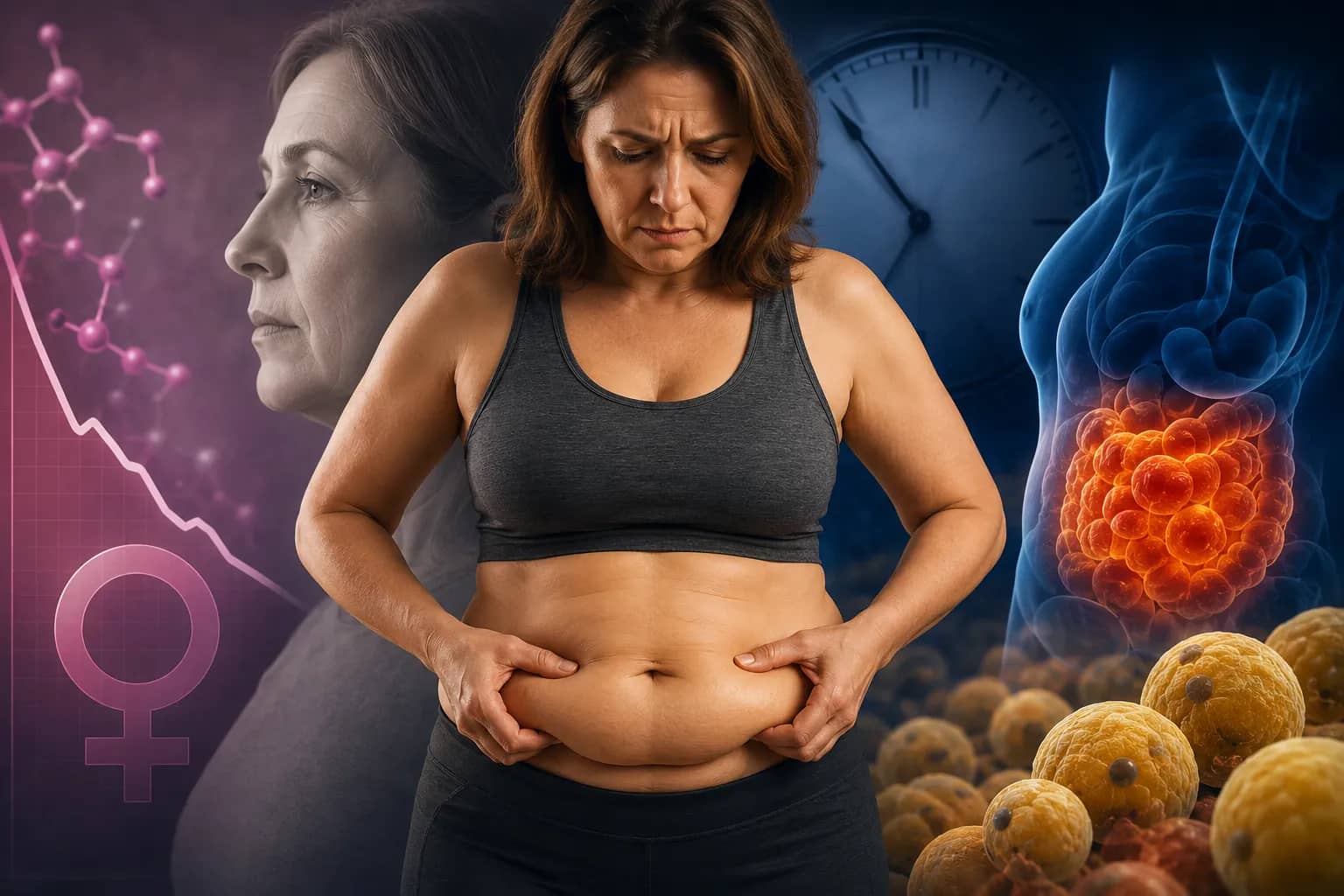
If you've noticed your waistline expanding in your 40s even when your diet and exercise habits haven't changed you're not imagining it. Belly fat after 40 is one of the most common health concerns, and it's driven by very real, measurable changes in your body.
This isn't about willpower or effort. It's about biology. Understanding why belly fat increases after 40 is the first step to doing something meaningful about it.
If you want a practical starting point while you read, it can help to track one simple metric each week (for example waist circumference, not just scale weight) and pair it with a sustainable routine. Many people find that consistency becomes easier when they focus on strength and sleep first, not just restriction.
What Changes in Your Body After 40?
1. Hormonal Shifts Redirect Fat Storage
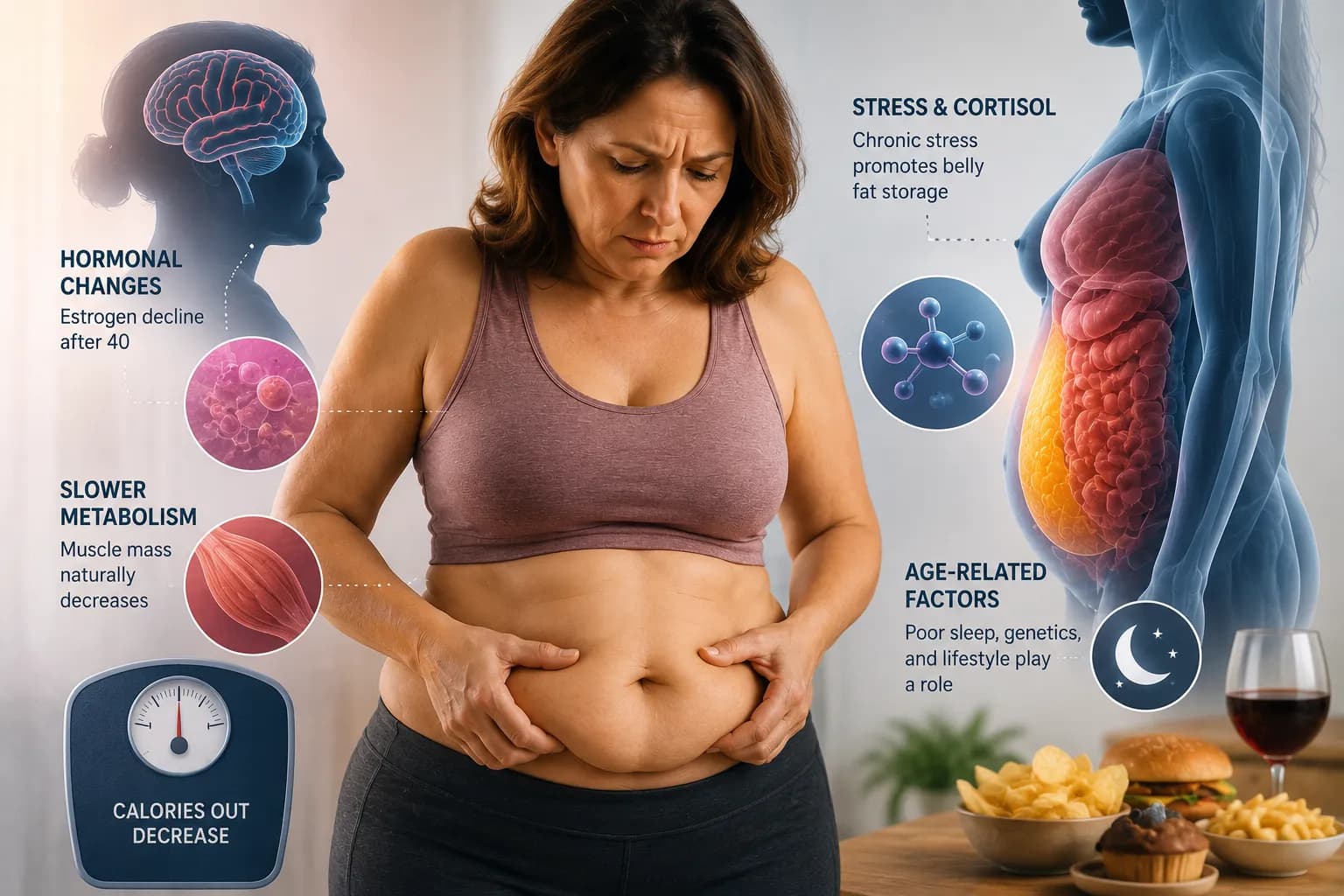
For women, the perimenopausal transition which typically begins in the early-to-mid 40s causes oestrogen levels to fluctuate and gradually decline. Oestrogen plays a significant role in determining where your body stores fat. When levels drop, the body shifts fat storage from the hips and thighs (subcutaneous fat) toward the abdomen (visceral fat).
For men, declining testosterone after 40 reduces lean muscle mass and promotes fat accumulation, particularly in the midsection.
If your changes line up with menopause timing, you might also find the UK-focused guidance in Menopause & weight (UK guide) useful as a broader context for how hormones can shift hunger, sleep, and energy.
2. Muscle Mass Declines (Sarcopenia Begins)
From around age 30, the body starts losing muscle mass at approximately 3 to 8 percent per decade a process called sarcopenia. After 40, this accelerates if not actively countered with resistance training. Since muscle is metabolically active tissue, losing it reduces your resting metabolic rate. The result: your body burns fewer calories at rest, even if your diet stays the same.
3. Insulin Sensitivity Decreases
As we age, cells become less responsive to insulin, the hormone that regulates blood sugar. When insulin sensitivity declines, the body is more likely to convert excess glucose into fat and to store it viscerally, deep in the abdomen around the organs.
4. Metabolic Rate Slows Naturally
Even without muscle loss, the body's basal metabolic rate (BMR) tends to decline with age due to changes in mitochondrial efficiency and hormonal signalling. Eating the same number of calories at 45 as you did at 25 can create a small but meaningful daily surplus.
5. Cortisol Becomes More Influential
Chronic stress is common in midlife career pressures, family responsibilities, financial demands. Elevated cortisol (the stress hormone) directly promotes visceral fat storage, particularly in the abdominal area. After 40, the body's stress response system also becomes less efficient at returning to baseline, meaning cortisol stays elevated longer.
The Four Key Hormones Driving Belly Fat After 40
Hormones act as biochemical signaling molecules that direct exactly where your body stores adipose tissue and how readily it mobilises fat for fuel. After 40, four primary hormones undergo pronounced shifts:
1. Oestrogen (in Women)
During perimenopause and menopause, fluctuating and ultimately declining oestrogen levels trigger a fundamental shift in fat distribution. Prior to 40, oestrogen directs excess energy into subcutaneous storage around the hips, thighs, and buttocks. As oestrogen declines, the body preferentially deposits adipose tissue viscerally deep within the abdominal cavity. Lower oestrogen is also linked with reduced insulin sensitivity and slower lipid oxidation.
2. Testosterone (in Men and Women)
In men, circulating testosterone levels decline gradually at approximately 1% per year after age 30. Reduced testosterone accelerates age-related muscle loss (sarcopenia), depresses baseline daily calorie expenditure, and promotes central visceral fat accumulation. In women, declining oestrogen combined with relatively higher free androgens can also accentuate midsection weight gain.
3. Cortisol (The Stress & Sleep Hormone)
Midlife frequently brings demanding career, family, and eldercare responsibilities, often compounded by fragmented sleep. Chronic psychological or physiological stress keeps cortisol persistently elevated. Visceral fat cells express up to four times more glucocorticoid (cortisol) receptors than subcutaneous fat cells, making your waistline uniquely sensitive to stress-induced fat storage.
4. Insulin (Blood Glucose Regulation)
Peripheral insulin sensitivity naturally declines with age and reduced skeletal muscle activity. When muscle and liver cells become resistant to insulin, the pancreas secretes higher baseline concentrations to clear blood glucose. Elevated circulating insulin actively suppresses lipolysis (fat breakdown) and channels surplus dietary energy straight into visceral adipose depots.
Visceral Fat vs. Subcutaneous Fat: Why It Matters
Not all belly fat is the same. There are two distinct types.
Subcutaneous fat sits just under the skin the fat you can pinch. It's visible and often cosmetically concerning, but it's metabolically relatively inert.
Visceral fat sits deep inside the abdominal cavity, surrounding organs like the liver, pancreas, and intestines. This is the fat that accumulates most readily after 40, and it's far more dangerous.
Visceral fat can contribute to health risks in several ways:
1. Produces inflammatory cytokines that raise cardiovascular disease risk
2. Disrupts insulin signalling, contributing to type 2 diabetes
3. Releases fatty acids directly into the portal blood supply to the liver
4. Is associated with higher risks of certain cancers
This is why belly fat after 40 is a health issue, not just an aesthetic one.
Why Your Old Approach to Weight Loss Stops Working
Many people in their 40s find that the strategies that worked in their 20s and 30s cutting calories, doing more cardio no longer produce the same results. Here's why.
1. Hormonal changes mean fat distribution has fundamentally shifted
2. Lower muscle mass means calorie cutting further depletes lean tissue
3. Elevated cortisol from excessive cardio can actually increase visceral fat storage
4. Reduced sleep quality (common after 40) disrupts hunger hormones leptin and ghrelin
Eating less and exercising more in the conventional sense can actually backfire if not approached correctly for the post 40 body.
What Actually Drives Belly Fat After 40: A Summary
| Factor | How it contributes |
|---|---|
| Declining oestrogen or testosterone | Shifts fat storage to the abdomen |
| Sarcopenia (muscle loss) | Lowers metabolic rate |
| Reduced insulin sensitivity | Promotes visceral fat formation |
| Elevated cortisol | Directly fuels abdominal fat storage |
| Poor sleep quality | Disrupts hunger hormones |
| Lower physical activity | Reduces calorie burn and muscle maintenance |
Can You Reverse Belly Fat After 40?
Yes but the approach needs to match the biology. Research consistently shows that these evidence based strategies are most effective after 40.
1. Strength and resistance training rebuilds muscle mass, boosts metabolic rate, and improves insulin sensitivity
2. Moderate intensity movement daily walking has been shown to reduce visceral fat without spiking cortisol
3. Protein focused nutrition higher protein intake preserves muscle during a calorie deficit
4. Stress management directly addresses the cortisol visceral fat connection
5. Sleep optimisation 7 to 9 hours per night normalises hunger hormones and cortisol rhythms. If sleep has been the hardest piece, it may help to start with simple routines and keep them consistent. You can also explore the supportive resources linked from our sleep hub content, which highlights how sleep affects hunger hormones and cravings in everyday life.
6. Reducing refined carbohydrates and sugar addresses insulin resistance without extreme restriction
When GLP-1 Treatment May Be an Option
For many adults over 40, significant hormonal shifts and established insulin resistance mean that lifestyle changes alone may struggle to reduce stubborn visceral belly fat, particularly when accompanied by an elevated BMI.
In the UK, modern prescription GLP-1 and dual GIP/GLP-1 receptor agonists such as Mounjaro (tirzepatide) and Wegovy (semaglutide) are licensed for chronic weight management. These medications mimic natural incretin hormones to reduce appetite, quieten constant "food noise", delay gastric emptying, and improve metabolic insulin sensitivity.
Under UK clinical guidelines (NICE), private and NHS prescribing eligibility typically requires a BMI of 30 kg/m² or above, or a BMI of 27 kg/m² or above with at least one weight-related condition such as hypertension, pre-diabetes, or obstructive sleep apnoea (with lower thresholds of 27.5 and 23 for people from South Asian, Chinese, Black African, or African-Caribbean backgrounds).
If you and your doctor decide medical weight loss treatment is appropriate, you can compare transparent pen prices across licensed UK pharmacies in our Mounjaro price comparison and Wegovy price comparison tables.
How HealthWise360 Can Help
At HealthWise360, we take a whole body approach to health after 40. Our evidence based resources cover everything from hormonal health and nutrition to exercise and mental wellbeing helping you understand your body and take meaningful action.
Explore our related guides:
Hormones and weight management in midlife: explore our practical guide to Menopause & weight (UK guide).
Is Visceral Fat Different from Belly Fat? The visceral section above breaks down what matters most: where it sits, why it is riskier, and which lifestyle levers are most effective.
Why Do Old Diets Stop Working After 40? If you feel stuck, consider focusing on protein and strength training first before you tighten calories, so you preserve lean mass.
Frequently Asked Questions
Why does belly fat suddenly appear after 40?
It's rarely sudden the changes are gradual and driven by declining sex hormones, reduced muscle mass, and lower insulin sensitivity. The perimenopausal transition in women and declining testosterone in men both shift fat storage to the abdomen.
Is belly fat after 40 dangerous?
Visceral belly fat the deep fat around organs is associated with higher risks of cardiovascular disease, type 2 diabetes, and metabolic syndrome. It's not purely cosmetic.
Can you lose belly fat after 40?
Yes, absolutely. It requires a strategy tailored to the post 40 body: strength training, adequate protein, sleep, stress management, and moderate activity. Extreme calorie restriction and excessive cardio are often counterproductive.
Why doesn't eating less work anymore after 40?
Because the underlying issue isn't just calorie intake it's hormonal changes, muscle loss, and insulin resistance. Cutting calories without addressing these factors can further reduce muscle mass and elevate stress hormones, worsening the problem.
How long does it take to lose belly fat after 40?
With consistent, targeted effort, most people see measurable reductions in waist circumference within 8 to 12 weeks. Visceral fat is actually more metabolically responsive than subcutaneous fat, so it can reduce relatively quickly with the right approach.
Conclusion
Belly fat after 40 isn't a failure of willpower it's the result of predictable, measurable physiological changes. Declining hormones shift fat to the abdomen, muscle loss slows your metabolism, and rising cortisol from daily stress compounds the problem. Understanding these mechanisms is empowering: once you know why it's happening, you can take targeted action that actually works.
The good news is that the body remains highly adaptable even after 40. With the right combination of resistance training, smart nutrition, stress management, and quality sleep, reducing belly fat after 40 is entirely achievable.
Health Wise does not sell medicines; this article is general information and does not replace advice from your clinician.
Sources & further reading
Official UK guidance and published research on the topics covered in this article.
- 1Menopause
NHS
- 2
- 3