Can KwikPens Be Recycled?
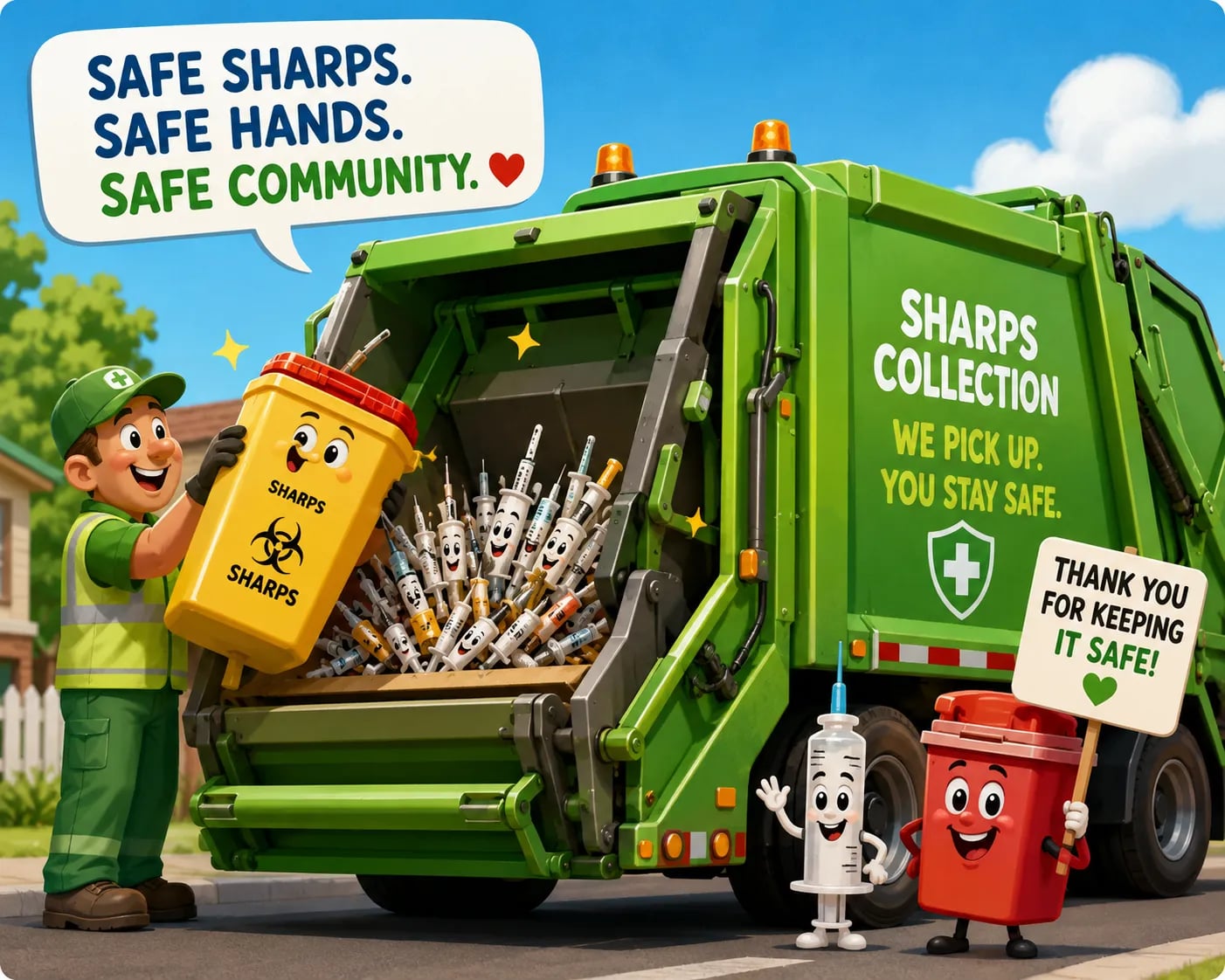
KwikPens used for Mounjaro (tirzepatide) cannot currently be recycled through standard UK household recycling. They combine plastic, metal, and other components, and may retain traces of medication after use. Most councils are happy to arrange the collection of medical sharps free of charge by a special collection.
- Never reuse or refill a KwikPen — pens are single-patient devices; reuse risks infection and dosing errors
- Remove the needle after each treatment and dispose of it in a sharps bin
- Dispose of the empty pen body in general household waste (not recycling), unless your pharmacist or local authority specifies a clinical waste route
Step 1: Handle Needles Safely
The NHS is clear: used needles must not go in household waste loose, and you should not try to bend, break, or snap them.
- Do not recap used needles — recapping increases the risk of needle-stick injuries. Follow your KwikPen instructions to unscrew or detach the needle and place it immediately into a sharps bin.
- Use an NHS-approved sharps bin — obtain one from your GP practice, specialist clinic, or pharmacy. When full, return it for incineration through arrangements offered by your surgery, pharmacy, or council.
- If you do not yet have a sharps bin — use a strong, puncture-resistant plastic container with a secure lid (e.g. an empty laundry detergent bottle), label it clearly as containing sharps, and take it to a pharmacy or collection point as soon as possible. This is an interim measure only.
Step 2: Dispose of the Pen Body
Once the needle has been removed and disposed of safely:
- Place the empty pen body in your general household waste (not recycling)
- Some patients prefer to place the pen in the sharps bin as well for extra caution—check with your pharmacist whether your bin capacity allows this
- Do not put KwikPens in plastic or paper recycling streams
Returning Unused Medication
If you have Mounjaro pens you no longer need for example after a dose change or if treatment stops return them to a pharmacy. The NHS recommends returning unused medicines rather than binning or flushing them, to protect waterways and prevent accidental ingestion.
Recycling Developments
Pharmaceutical packaging and device recycling schemes evolve. Industry initiatives and NHS pilot programmes occasionally introduce take back options for specific devices or regions. There is no guarantee that a scheme available in one country applies in the UK.
Names such as PenCycle or similar programmes may exist for certain product lines in some markets always confirm with your pharmacist, prescriber, or the current patient information for your device rather than assuming a scheme accepts Mounjaro KwikPens.
Why Proper Disposal Matters
- Prevents needle-stick injuries to waste handlers, children, and pets
- Reduces environmental contamination from active pharmaceutical ingredients
- Supports compliance with UK clinical waste and medicines disposal expectations
Related Guides
Browse more topics in our helpful guides hub.
Sources & Further Reading
This guide references the following official and authoritative sources.
- 1NHS — How to get rid of used needles
NHS guidance on sharps disposal, obtaining sharps bins, and what never to do with used needles.
- 2NHS — How to dispose of unused medicines
NHS advice on returning unused medicines to a pharmacy and why home disposal can harm the environment.
- 3Mounjaro (tirzepatide) patient information — EMC
Official patient-facing information for Mounjaro, including device handling; always follow the leaflet supplied with your pack.
- 4Mounjaro delivery & storage UK — Health Wise
Cold-chain storage, checking deliveries, and keeping pens safe before use.