Introduction
The short answer is: yes. Hormones are among the most powerful drivers of belly fat accumulation after 40 and in many cases, they explain why intelligent, health conscious people suddenly find their midsection changing despite no obvious lifestyle shifts.
Understanding which hormones are involved, how they interact, and what you can do to support hormonal balance is one of the most effective routes to managing belly fat in midlife.
If you're exploring this topic because your waist has changed in your 40s, our companion guide Why does belly fat increase after 40? explains the broader biology (muscle loss, metabolic changes, insulin sensitivity) so you can see how hormones sit within the full picture.
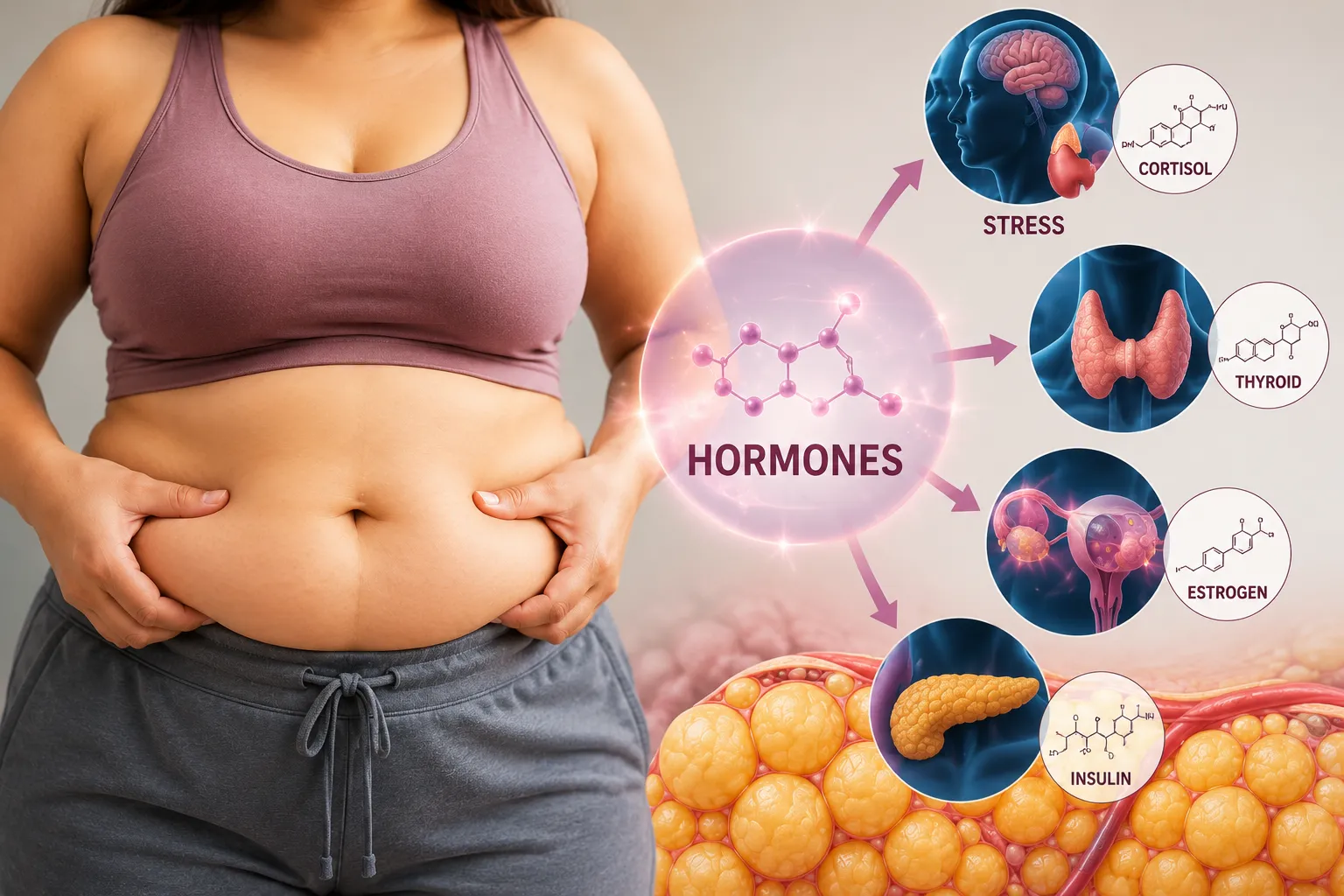
The Four Key Hormones Driving Belly Fat After 40
1. Oestrogen: The Fat Redistribution Hormone
Oestrogen is the primary driver of body fat distribution in women. When oestrogen levels are optimal, fat tends to be stored in the hips, buttocks, and thighs a pattern associated with lower cardiovascular risk.
As women enter perimenopause (typically 40 to 51), oestrogen levels fluctuate significantly before eventually declining. This hormonal shift changes where fat is stored. The body redirects fat accumulation toward the abdominal region, particularly visceral fat the deep fat surrounding the organs.
Research published in Obesity Reviews confirms that this oestrogen related redistribution from peripheral (hip and thigh) to central (abdominal) fat storage is a consistent feature of the menopausal transition.
What happens:
1. Less oestrogen leads to reduced peripheral fat storage
2. Fat storage shifts to visceral (abdominal) depots
3. Abdominal fat becomes more metabolically active and inflammatory
If you want a UK-focused angle on menopause and weight, this guide is a helpful follow up: Menopause & weight (UK guide).
2. Testosterone: The Muscle Protecting Hormone (Affects Both Sexes)
Testosterone is critical for maintaining lean muscle mass. In men, testosterone declines gradually from around age 30 a process sometimes called andropause. By the mid 40s, this decline can be clinically significant.
In women, testosterone also plays a role, and its levels drop across the menopause transition alongside oestrogen.
Lower testosterone means:
1. Reduced ability to build and retain muscle
2. Lower resting metabolic rate (muscle burns more calories than fat)
3. Increased fat to muscle ratio, particularly in the midsection
This is why men in their 40s often develop a pronounced abdominal change even with relatively stable diet and activity levels.
3. Cortisol: The Stress Hormone That Feeds Belly Fat
Cortisol is released by the adrenal glands in response to stress physical, emotional, or psychological. In the short term, it's protective. Chronically elevated, it becomes one of the most potent drivers of visceral fat accumulation.
Visceral fat cells have a high density of cortisol receptors. When cortisol is chronically elevated, these cells actively take up and store fat. This creates a direct hormonal pathway from stress to abdominal weight gain.
After 40, the body's stress response system (the HPA axis) becomes less efficient at returning to baseline, meaning cortisol remains elevated for longer after stressful events.
The cortisol belly fat cycle:
1. Chronic stress leads to elevated cortisol
2. Cortisol stimulates appetite (particularly for high calorie foods)
3. Cortisol directs fat storage to visceral depots
4. Visceral fat itself produces cortisol, perpetuating the cycle
If stress and sleep feel intertwined for you, it may help to focus on one small sleep routine first. Sleep affects hunger hormones and cravings, so it often makes every other lever easier.
4. Insulin: The Storage Hormone
Insulin regulates blood sugar by directing glucose into cells for energy or storage. After 40, cells become progressively less responsive to insulin's signals a state known as insulin resistance.
When cells resist insulin's signals, the pancreas compensates by producing more. Elevated insulin levels strongly promote fat storage, and the abdominal region is particularly sensitive to this effect.
Insulin resistance also makes it harder for fat cells to release stored fat for energy which is why people with insulin resistance often feel like their fat is locked in place.
How These Hormones Interact: The Bigger Picture
These four hormones don't operate independently they form an interconnected system, and imbalances in one often affect the others.
1. Oestrogen and cortisol: Oestrogen has a natural cortisol buffering effect. As oestrogen declines, the brain becomes more reactive to stress, and cortisol responses become more pronounced.
2. Cortisol and insulin: Cortisol raises blood glucose (to provide energy during stress), which triggers insulin release. Chronic cortisol elevation is a major contributor to insulin resistance.
3. Testosterone and insulin: Testosterone improves insulin sensitivity. As testosterone declines, insulin resistance tends to worsen.
This hormonal web explains why belly fat after 40 can feel so resistant to conventional approaches the underlying drivers are systemic, not just caloric.
Signs That Hormones Are Behind Your Belly Fat
Hormonal belly fat tends to have specific characteristics that distinguish it from simple overeating.
1. Fat accumulation primarily in the lower abdomen and waist, with little change elsewhere
2. Weight gain despite no obvious change in diet or activity
3. Difficulty losing abdominal fat even with consistent exercise and dietary restriction
4. Accompanying symptoms: fatigue, disrupted sleep, mood changes, hot flushes (in women), low libido
5. A softer or more fluid feeling in the abdominal area
If these patterns resonate, hormonal factors are likely contributing.
What You Can Do: Supporting Hormonal Balance for Belly Fat Management
For Oestrogen and Testosterone Decline
1. Resistance training is the most evidence supported intervention it partially compensates for declining sex hormones by improving body composition and insulin sensitivity
2. HRT (Hormone Replacement Therapy) for women, HRT doesn't directly burn fat, but by stabilising oestrogen, it can improve sleep, reduce stress reactivity, and improve insulin sensitivity, creating conditions where fat management becomes easier. Discuss risks and benefits with your GP
3. Phytoestrogens (soy, flaxseed) may provide modest oestrogen like effects for some women
4. Adequate dietary fat sex hormones are made from cholesterol; very low fat diets can impair hormone production
For Cortisol Management
1. Prioritise sleep (7 to 9 hours) poor sleep is one of the strongest drivers of cortisol elevation
2. Implement stress management practices: mindfulness, breath work, nature exposure
3. Avoid excessive duration cardio long, intense cardio sessions raise cortisol significantly
4. Reduce caffeine after midday caffeine stimulates cortisol release
For Insulin Sensitivity
1. Reduce refined carbohydrates and added sugars
2. Increase dietary fibre slows glucose absorption
3. Walk after meals even 10 minutes significantly blunts the post meal glucose spike
4. Resistance training muscle tissue is the body's primary glucose sink
| Hormone | Common midlife shift | Most helpful lever |
|---|---|---|
| Oestrogen | Fluctuates then declines in perimenopause/menopause | Strength training + sleep support |
| Testosterone | Gradual decline affects lean mass and metabolism | Progressive resistance training |
| Cortisol | Stays elevated longer after stress | Sleep + stress routines, avoid overtraining |
| Insulin | Sensitivity declines; resistance rises | Fibre, walking after meals, strength work |
Should You Get Your Hormones Tested?
If you suspect hormonal imbalance is driving your belly fat, a GP can arrange basic hormone panels. For women, this includes FSH, LH, and oestradiol (particularly during the perimenopause transition). For men, total and free testosterone are the key markers.
A comprehensive thyroid panel (TSH, T3, T4) is also worth considering underactive thyroid (hypothyroidism) is common after 40 and significantly slows metabolism.
Frequently Asked Questions
Do hormones directly cause belly fat?
Yes declining oestrogen shifts fat storage to the abdomen, low testosterone reduces muscle mass (raising body fat percentage), chronically elevated cortisol fuels visceral fat accumulation, and insulin resistance locks fat in place.
Can HRT help reduce belly fat?
HRT doesn't directly burn fat, but by stabilising oestrogen it can improve conditions (better sleep, lower stress reactivity, improved insulin sensitivity) that make belly fat easier to manage. Studies show women on HRT tend to have lower visceral fat than those not taking it, but HRT isn't appropriate for everyone.
Is cortisol the main hormone causing belly fat?
Cortisol is a major driver, but it works in combination with other hormones. The interplay between declining sex hormones, cortisol, and insulin resistance explains the full picture of belly fat after 40.
Can balancing hormones help with weight loss?
Supporting hormonal balance through lifestyle, nutrition, stress management, and in some cases medical intervention creates conditions where the body is more responsive to weight management efforts. It's not a magic solution but an important foundation.
What foods help balance hormones after 40?
A Mediterranean style diet rich in vegetables, lean protein, healthy fats, fibre, and limited refined carbohydrates supports hormonal health. Specific foods include: oily fish (omega 3s support inflammation and hormone function), flaxseed (lignans may support oestrogen balance), and cruciferous vegetables (support oestrogen metabolism).
Conclusion
Hormones play a central, well documented role in driving belly fat after 40. Declining oestrogen redistributes fat to the abdomen, lower testosterone reduces metabolically active muscle, chronic cortisol pumps fat into visceral storage, and insulin resistance makes it stubbornly difficult to shift. These aren't separate problems they're an interconnected hormonal web.
The encouraging news is that lifestyle interventions particularly strength training, sleep optimisation, stress management, and smart nutrition directly address this hormonal picture. And for some people, medical support such as HRT or testosterone therapy can make meaningful additional difference.
If your belly fat arrived with your 40s, look to your hormones. That's where the conversation needs to start.
Health Wise does not sell medicines; this article is general information and does not replace advice from your clinician.