
Hormonal imbalance
Elevated cortisol increases hunger and cravings.
Weight loss guide
Understand the science behind stress, cravings, and fat storage—and learn how to regain control of your body and habits.


What's the link?
Stress plays a powerful role in weight regulation. When your body experiences ongoing stress, it releases cortisol—a hormone that can increase appetite and drive cravings for high-calorie, high-fat foods.
Over time, this can lead to overeating and fat storage, particularly around the abdomen. While short-term stress may temporarily reduce appetite, chronic stress tends to have the opposite effect—making weight gain more likely.
Elevated cortisol increases hunger and cravings.
Your body can become less efficient at burning fat under chronic strain.
Stress triggers cravings for comfort foods high in sugar and fat.
Disrupted sleep makes weight management harder.
Fatigue and stress reduce physical activity levels.
Frequent illness can interrupt healthy routines.
Acute stress
Examples
Chronic stress
Examples
Chronic stress is where weight-gain risks increase significantly.
Take control
Managing stress isn't about eliminating it—it's about building resilience. By combining physical, mental, and lifestyle strategies, you can reduce its impact on your body and improve your weight loss outcomes.

Movement reduces stress hormones and boosts mood.
Supports hormone regulation and energy stability.
Improves recovery and helps regulate cortisol.
Meditation and breathing calm your nervous system.
Social support reduces emotional pressure.
Structure reduces overwhelm and anxiety.

Stress management works best when combined with other core pillars of health. When these elements work together, your body becomes more resilient and responsive to change.
Balanced meals stabilise energy and reduce stress-related cravings.
Improves mood, burns calories, and builds resilience.
Essential for recovery and hormonal balance.
Support your body and mind with a structured, science-backed programme.
Combine nutrition, movement, sleep, and stress skills with clinician-led pathways where appropriate—so change feels achievable, not overwhelming.
Educational content only. Treatment access depends on UK prescribing rules and individual assessment.
How to build an effective routine that supports mood and fat loss.
Read moreWhat to eat for sustainable results alongside stress care.
Read moreStay comfortable during treatment while you stabilise habits.
Read moreCortisol, emotional eating, sleep, and how medical weight loss fits in.
Cross-links for diet, exercise, tips, GLP-1 education, safety, and tools—supporting topical authority around stress, cravings, and weight.
Recommended for you
Most people benefit from reading independent guides alongside a clinician led plan. Prices and eligibility change often: confirm details on a regulated pharmacy site before you pay.
 Guide
GuideWant to switch pharmacy for Mounjaro or Wegovy? How to compare regulated providers, what documents you need, and how to switch safely.
Read → Guide
GuideMost patients receive Mounjaro within 1–3 days of approval. Learn the prescription process and how to avoid common delays.
Read → Article
Semaglutide weight loss UK guide: learn safe routes, prescription checks, price factors and pharmacy red flags.
Read → Guide
GuideMounjaro reduces appetite and may lower nutrient intake. The evidence on multivitamins while using Mounjaro, cutting through influencer noise.
Read →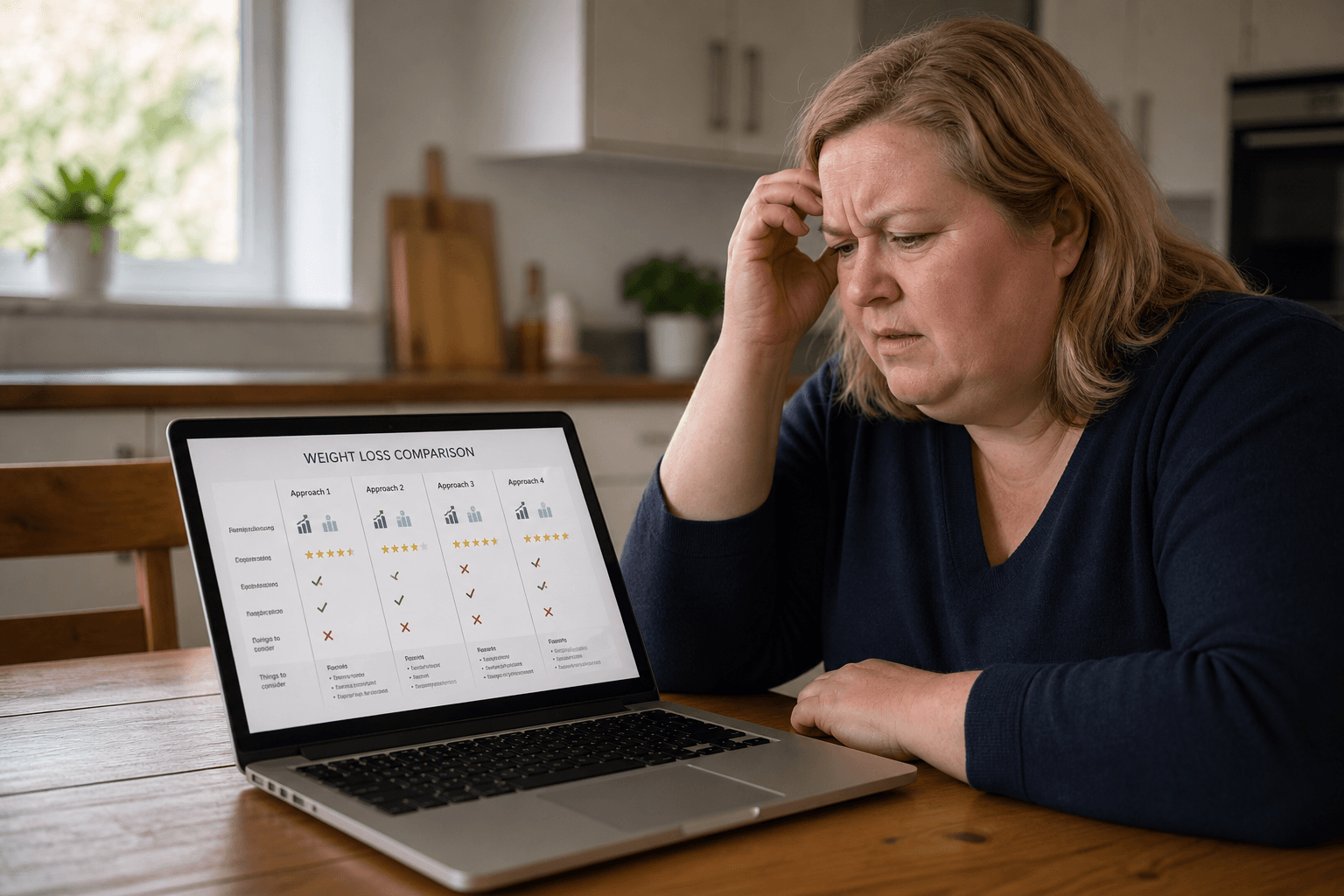 Article
Compare safe UK weight loss treatment providers, prices, pharmacy checks and support before starting treatment.
Read → Guide
GuideMounjaro must be stored between 2°C and 8°C. How to check your delivery, understand temperature safety zones, and what to do if it arrives warm.
Read →We use cookies for analytics (Google Analytics) to understand how visitors use this site. No personal data is sold or shared for advertising. You can change your choice at any time using “Cookie settings” in the footer.